We use cookies on this site to enhance your experience.
By selecting “Accept” and continuing to use this website, you consent to the use of cookies.
With approximately 8.7 million people facing food insecurity across the country, many Canadian families have to make tough decisions between paying rent and putting food on the table – and postsecondary students are no exception.
In a recent financial wellness survey, more than 40 per cent of Laurier students said they struggle to afford food.
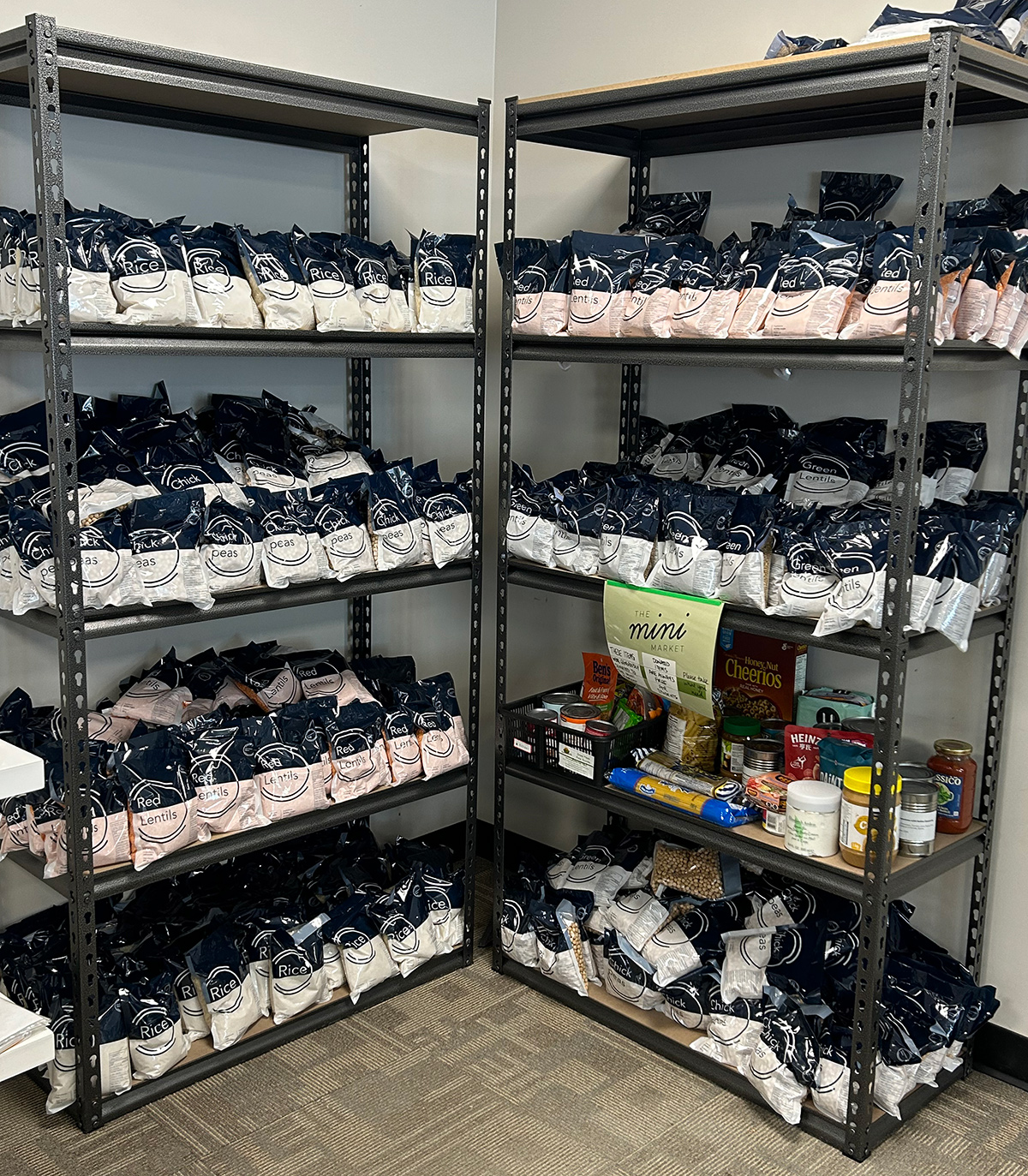
To help meet this urgent need, Canadian charitable foundation GlobalMedic donated six pallets of nonperishable food to the Mini-Market on Laurier’s Waterloo campus.
“GlobalMedic recognizes that food insecurity is at an all-time high in the province right now, and this can affect students in a number of ways,” says Kellan Shields, emergency programs officer at GlobalMedic. “Students spend a lot of time and energy on their studies, and in between tuition, rent, transport and less time to work a job, they can be at risk of hunger.”
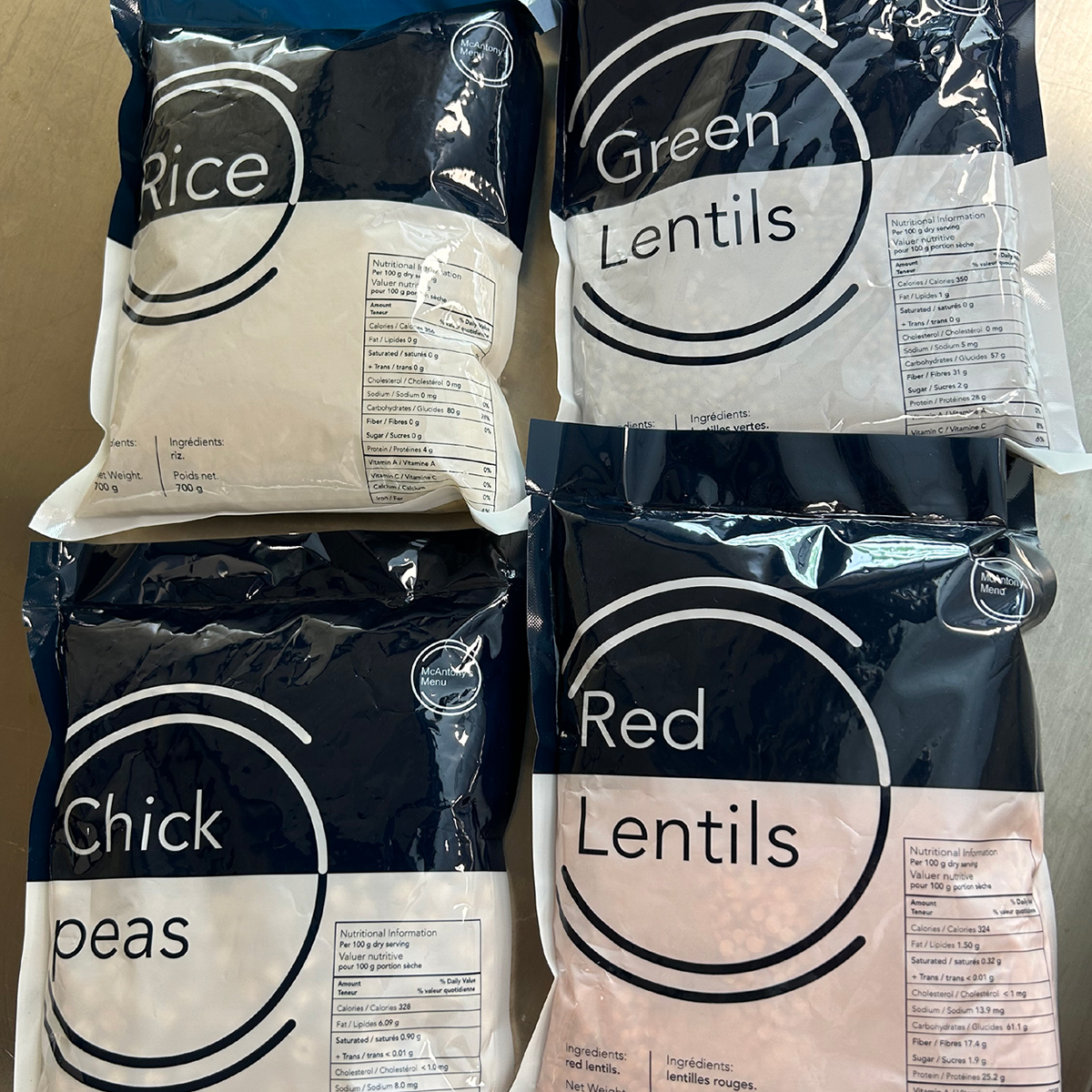
Originally founded in 2002, GlobalMedic provides humanitarian aid to people affected by poverty, disaster and conflict. The foundation started developing its Emergency Food Program in 2018 to distribute Emergency Food Kits to areas affected by conflict and disasters. The domestic arm of the program, McAntony’s Menu, uses volunteers and distribution networks to deliver nonperishable food items to local food banks, including the Wilfrid Laurier University Graduate Students’ Association (GSA) Mini-Market.
“By providing shelf-stable, healthy grains to Laurier’s Mini-Market, we are able to ensure that students get the nutrition they need to perform to the best of their abilities,” Shields says.
The GSA Mini-Market is a pay-what-you-can grocery store addressing student food insecurity. Serving around 8,000 students every term, the Mini-Market stocks perishable and nonperishable foods, Heat & Eat prepared meals and other essentials like hygiene products and household items. Laurier students pay what they can afford based on their budget, ranging from full price to no charge.
“GlobalMedic’s donation has been a great addition to the Mini-Market,” says Krista Klein, food security kitchen manager for the GSA. “Their contribution of dry goods helps build a stable supply of essential foods that we can distribute throughout the Laurier community. It’s a meaningful way to support students in making nutritious meals.”
In addition to the gift of packaged food, GlobalMedic has donated personal hygiene and cleaning products to the Mini-Market and to stock bathrooms in the Indigenous Student Centre in Waterloo.
“The entire premise of our Food Program is that it’s adaptable and can be changed to best fit the needs of the people we’re looking to reach,” Shields says. “We’re so happy to help Laurier students through the Mini-Market. It’s what we’re here for.”
In addition to the Mini-Market, many campus partners are fighting food insecurity: the Students’ Union food banks give access to nonperishable food items, cleaning supplies, toiletries and personal hygiene products; the Leanne Holland Brown Student Emergency Fund and Indigenous Student Emergency Fund offer one-time relief for students facing unforeseen financial crises; student bursaries provide tuition relief for students in financial need; and financial literacy support helps students learn to manage their finances.
JinYoung (Cherish) Hwang is a financial literacy specialist at Laurier, working directly with students to help them manage financial independence, often for the first time in their lives.
“It’s a huge learning curve,” Hwang says. “They’re learning how to make a budget, how to plan meals, how to grocery shop and how to manage their finances and a full-time courseload at the same time.”
When making a budget, students prioritize their spending based on what’s important to them, and often that means tuition and rent. Above all, Golden Hawks want to make sure they can stay in their programs and stay in their homes.
But as Hwang points out, the cost of living has doubled for Laurier students in less than 10 years.
“The average cost of rent, food, bills and transportation for a student is about $1,900 per month – and that doesn’t include tuition,” she says. “It is impossible for a full-time student to earn that much income without compromising their education.”
For many students, this high cost of living means they choose cheaper, less nutritious food options like instant noodle packs and energy drinks. More than half of Laurier students who are reaching out report eating less than they should or skipping meals entirely just to get by. Some students are even going deeper into debt just to put food on the table.
Still, 18 per cent of Laurier students who struggle to afford food said they had not taken advantage of on-campus resources. Some said this was because of perceived stigma around using food banks, while others live off-campus or study in Brantford or Milton, where there are fewer resources available.
“People who are accessing food banks deserve the dignity of choosing from items that are not obviously ‘charity food,’” Shields says. “We wanted the food donated through the McAntony’s Menu program to look similar to other products you would see in a retail environment, so the packaging design doesn’t feature the GlobalMedic name or logo.”
To help fill the need for more flexible and accessible food options, the newly created Student Nutrition Access Credit (SNAC) program works in partnership with on-campus resources, like the GSA Mini-Market, to respond to food insecurity where and when Golden Hawks need it the most.
By providing options like electronic gift cards to local grocery stores where students can buy fresh produce at their convenience, SNAC gives students access to nutritious food with privacy and dignity.